DRIVING ANXIETY · HIGHWAY PANIC · FEAR OF DRIVING

It was never about the car

The Driving Panic Protocol

A driving-anxiety workbook to take back every road you gave up — one exit at a time, safety first. Here's why the highways scare you, and one move for a road you already trust.

Built from 10,000+ real recovery stories · 4-min read

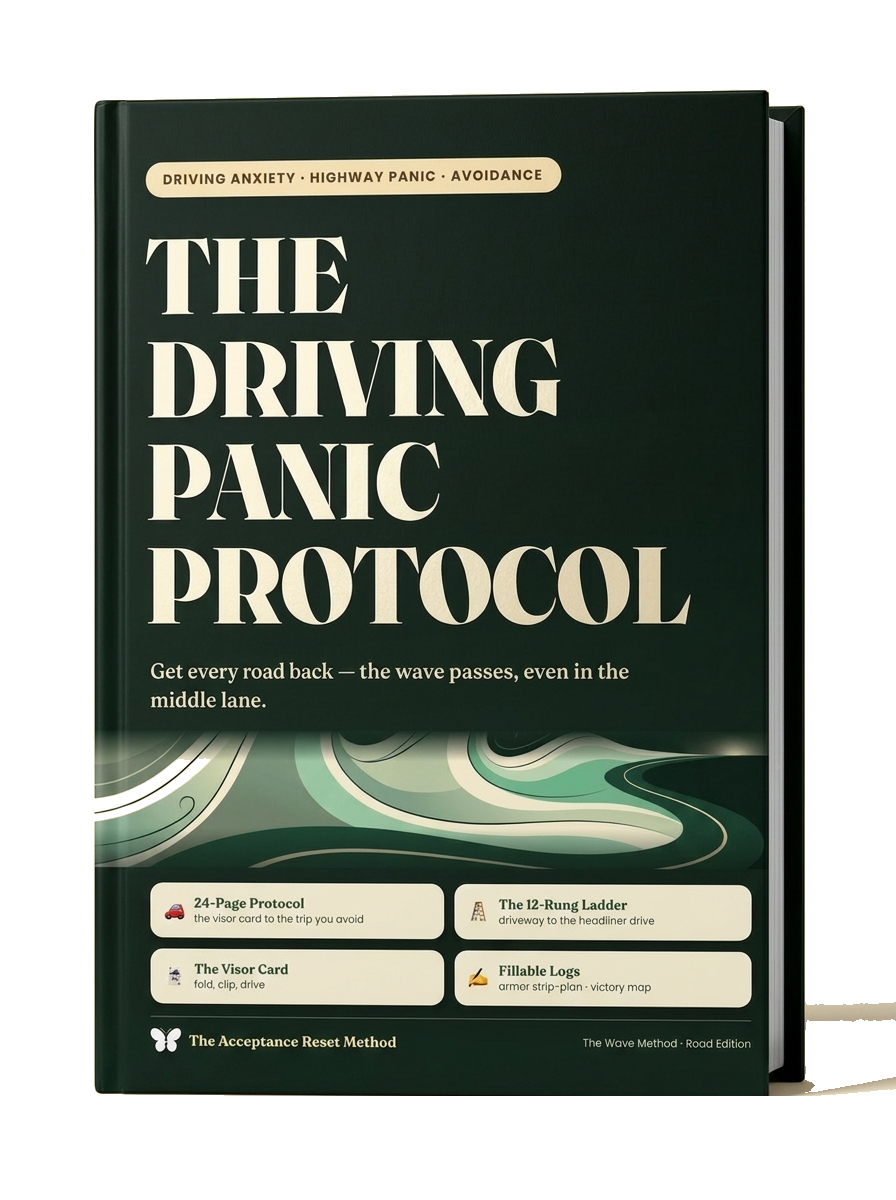
The The Driving Panic Protocol — kit mockup
The moment

You take the long way. You need someone in the car. You do exit math at every on-ramp. You used to just… drive.

It usually starts with one panic attack behind the wheel — and from there the map of your life quietly shrinks. Highways surrendered. Bridges avoided. Invitations declined by route rather than by reason. The world gets a little smaller each month, and you tell yourself you just prefer the back roads now.

Underneath all of it runs one fear: what if I faint at the wheel?

Here's the reframe that starts giving the roads back: it was never about the car. The roads you avoid aren't the dangerous ones — they're the ones you can't easily escape. And that changes everything about how you get them back.

Free · no email needed

First, the part nobody explains.

The core reframe and one move you can use — genuinely useful on its own. The kit is the full structured system.

First, the fear that runs it all — you will not faint at the wheel.

The catastrophe you brace for is, again, plumbing: a panic wave raises your blood pressure and heart rate. Ordinary fainting needs the opposite — a sudden drop. In a panic surge your body is doing the exact thing that keeps you conscious and driving. The worst what-if is close to physiologically backwards.

Then the pattern. Notice which roads scare you: highways, bridges, the middle lane, a long red light with cars boxing you in. They're not the dangerous roads — they're the commitment points, the places you can't immediately pull over and escape. That's the tell that this is anxiety, not danger: fear of being trapped, dressed up as fear of the road. Which is good news, because you don't retrain a road — you retrain your relationship with the wave, and you can do that starting from your own driveway.

One rule sits above all of this: the safety rule outranks every exposure rule. You never practise anything that isn't safe to practise. Recovery here is boring and gradual on purpose.

One move, on a road you already trust: let the wave ride along. Only on a familiar, low-stakes, safe stretch you drive comfortably — never a highway or anything that feels unsafe today:

  1. Name it before you turn the key. "If the wave comes, it rides along — my hands keep driving." You are separating the alarm (a feeling) from the task (steering, mirrors, speed). The alarm doesn't get a vote on the wheel.
  2. Keep your hands on the ordinary job. If a surge rises, don't fight it and don't pull the escape lever unless safety actually requires it. Let the heart race while your eyes stay on the road and your hands keep doing the boring, competent thing they know how to do.
  3. Let it crest and pass — then keep going one more block. The wave peaks and falls on its own. Staying with the drive through it (safely) is the rep that teaches your brain the road was never the danger.
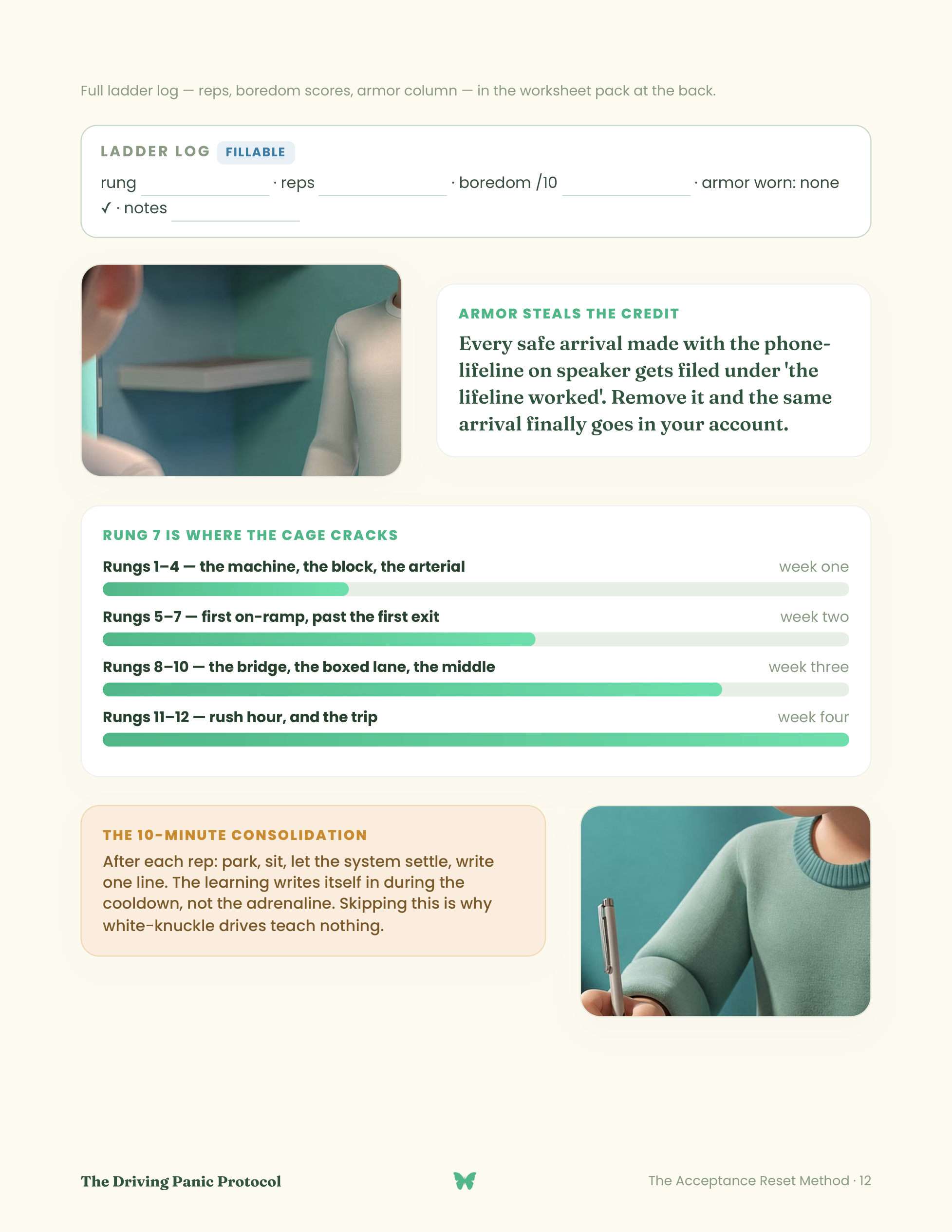
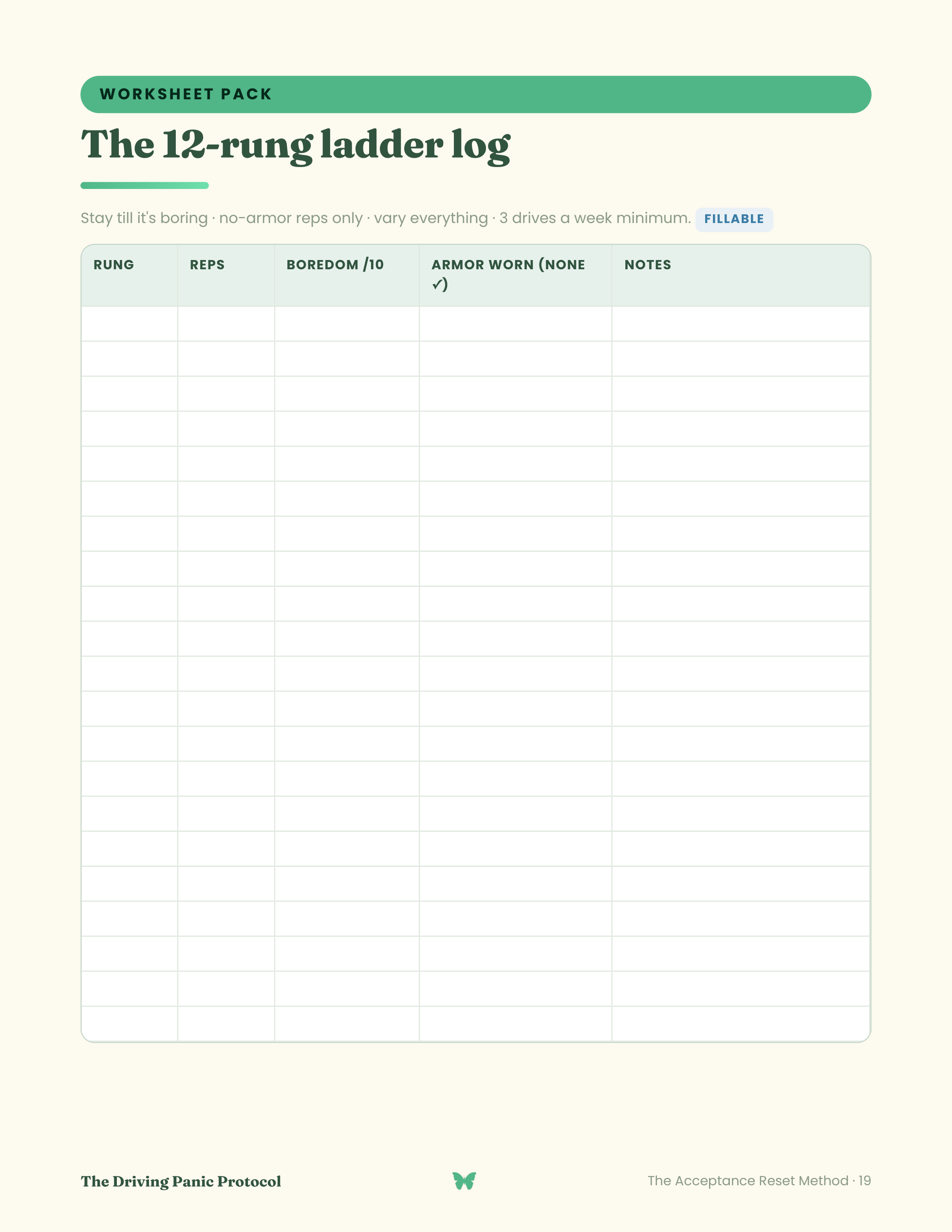
That's the move — small, safe, repeatable. The safety rule always wins; if a road isn't safe to practise on today, it isn't today's rung.

The full kit is the road back: the fold-and-clip visor card with the 4-move protocol for the wave at speed, the pre-filled 12-rung ladder from your driveway to the trip you've been avoiding, the armour inventory and strip-order, the skill appendix (merging, lanes, tailgaters), and the victory map.

What's inside the kit

Everything you need, in one kit.

  • 24pages
  • 7worksheets
  • PDFfillable + print
  • lifetime access
  • The 24-page guide — "you will not faint at the wheel" (the physiology, page 3)
  • The fold-and-clip visor card — the 4-move protocol for the wave at 60mph
  • The 12-rung driving ladder, pre-filled (driveway → block → arterial → on-ramp → bridge → the trip)
  • The armour inventory + strip-order (the passenger, the crawl, the hospital-mapped routes)
  • The skill appendix — merging, lane choice, tailgaters (confidence stacks on competence)
  • The victory map — highlight every road you take back
  • Ladder logs + 30-day plan + relapse card · the safety rule above every exposure rule
Inside The Driving Panic Protocol — page 1 Inside The Driving Panic Protocol — page 2 Inside The Driving Panic Protocol — page 3
Is this you?

This is for you if…

  • You take the long way, need a passenger, and do exit math at every ramp
  • one panic attack behind the wheel started shrinking your map
  • you avoid highways, bridges or the fast lane
  • you want the driver you used to be back, safely and in order.

Maybe not, if…

  • You're a new driver wanting lessons (this is for panic, not driving skill — though the skill appendix helps)
  • your fear is fresh trauma from a serious crash (the ladder starts gentler, and the guide flags when to get more support)
  • you'd be tempted to practise somewhere unsafe — the safety rule outranks every exposure rule, always.

Already have The Acceptance Reset Method ($47)? This kit is the same wave method aimed at one hard moment. If you own the full method you have the principle; this gives you the specific protocol, cards and tools for this exact situation.

Questions people ask

Before you decide.

The ladder is built so you can — it starts parked in your own driveway and moves only as far as is genuinely safe. The safety rule outranks every exposure rule in the kit; you never practise anything that isn't safe to practise.

Same ladder, gentler start, and the guide flags exactly where post-accident fear needs a slower on-ramp (and when it's worth adding professional support). It doesn't rush you back onto the road that scared you.

This is for panic, not for learning to drive. If the problem is skill rather than fear, driving lessons come first — though the skill appendix (merging, lanes, tailgaters) helps steady both.

No — "just do it" is how people re-traumatise themselves. This is graded exposure with a safety rule on top: the right rung, in the right order, on a safe road, with the wave-riding move that makes each rung stick.

No. The reframe and one move above are genuinely complete and free. The kit is the full structured system — the visor protocol, the 12-rung ladder, the skill appendix and the 30-day plan — the parts that turn one calm block into every road you gave up.

Get The Driving Panic Protocol.

The complete system — guide, worksheets, cards. Instant download, yours forever.

$9.99

🛡 30-day unconditional money-back guarantee · instant PDF · free preview pages

Want the whole system? Get all the kits together in The Complete Panic Toolkit — $44.99, or the full Acceptance Reset Method — $47.

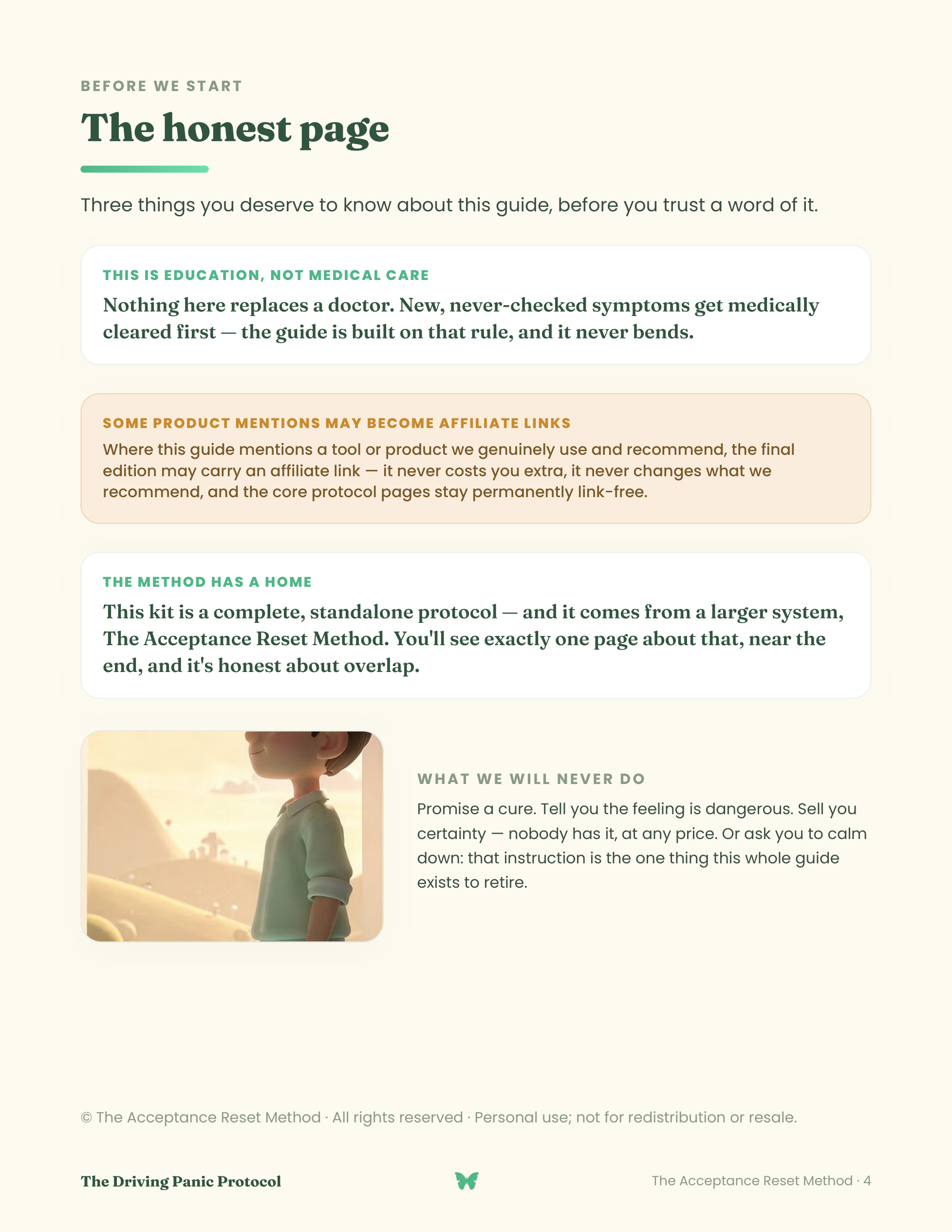
Education, not therapy

A self-guided educational program built from lived experience and published research — not medical or psychological treatment. Results vary from person to person.

One rule first

New, unusual, or unchecked symptoms — a racing heart, chest pain, anything that feels different from your normal? Get medically cleared first. This begins after a doctor has ruled physical causes out.

No cure claims

This retrains a learned alarm over time — it doesn't promise to cure anxiety or replace care from your own clinician. Any medication decisions stay between you and your doctor.

EXPLORE MORE