ANXIOUS ATTACHMENT · RELATIONSHIP ANXIETY · THE PULL-AWAY

The text you'd send now is never the one you'd send in an hour

The Pull-Away Protocol

An anxious-attachment workbook for the ninety seconds between "they haven't replied" and "I sent it." Here's why one slow reply hijacks your whole day, and one move to hold the wave. A real safety page comes first.

Built from 10,000+ real recovery stories · 4-min read

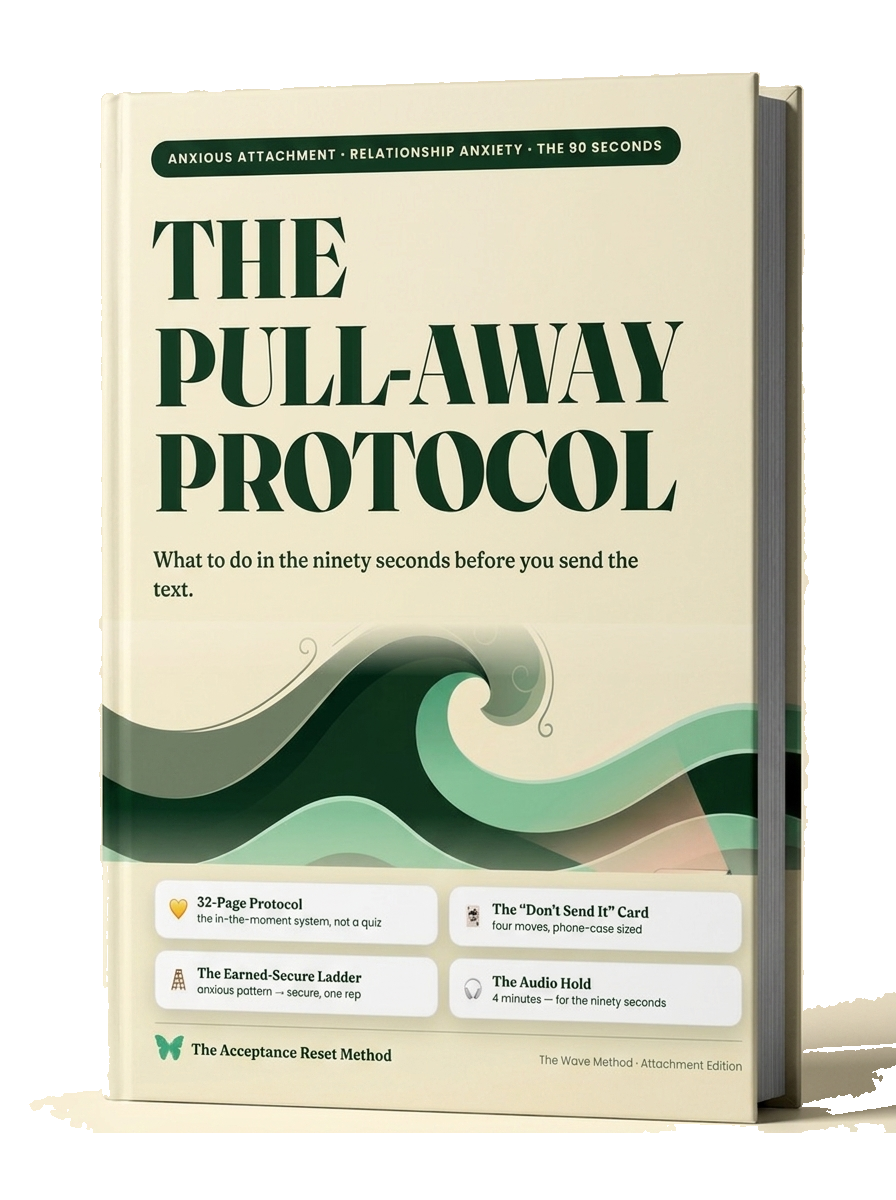
The The Pull-Away Protocol — kit mockup
The moment

They haven't replied, and you've checked your phone forty times. The pressure to send the text is unbearable — and some part of you already knows you'll regret it.

One slow reply and the whole day is gone: chest tight, re-reading old messages for tone, building conversations that never happened. Then the wave sends the text — the needy one, the sharp one, the little test — and the calmer you, an hour later, would never have sent any of it.

Everything online teaches you your attachment style. You can name it in your sleep by now. But not one thing hands you a move for the ninety seconds where the damage actually happens.

Here's the reframe: you are not too much. You are activated. There's a difference, and it changes everything you do next.

Free · no email needed

First, the part nobody explains.

The core reframe and one move you can use — genuinely useful on its own. The kit is the full structured system.

First, the one that matters most: this is for anxiety about someone — not fear of someone.

If you are ever frightened of your partner, walking on eggshells, or unsafe, that is not anxious attachment and it is not what this kit is for. Please reach out to real support — a person, not a workbook. Nothing here will ever ask you to override an instinct that says you're in danger. That line comes first, before any technique.

For the anxiety itself: the pull-away surge is a wave — the very same survival alarm that fires in any panic attack, except it's going off over a phone screen. The alarm is ancient and literal; it can't tell distance from danger, so a left-on-read registers the way a real threat once did. That's why a delayed text can hijack a whole afternoon. It isn't weakness or neediness. It's a smoke detector reacting to a slow reply as if it were a fire.

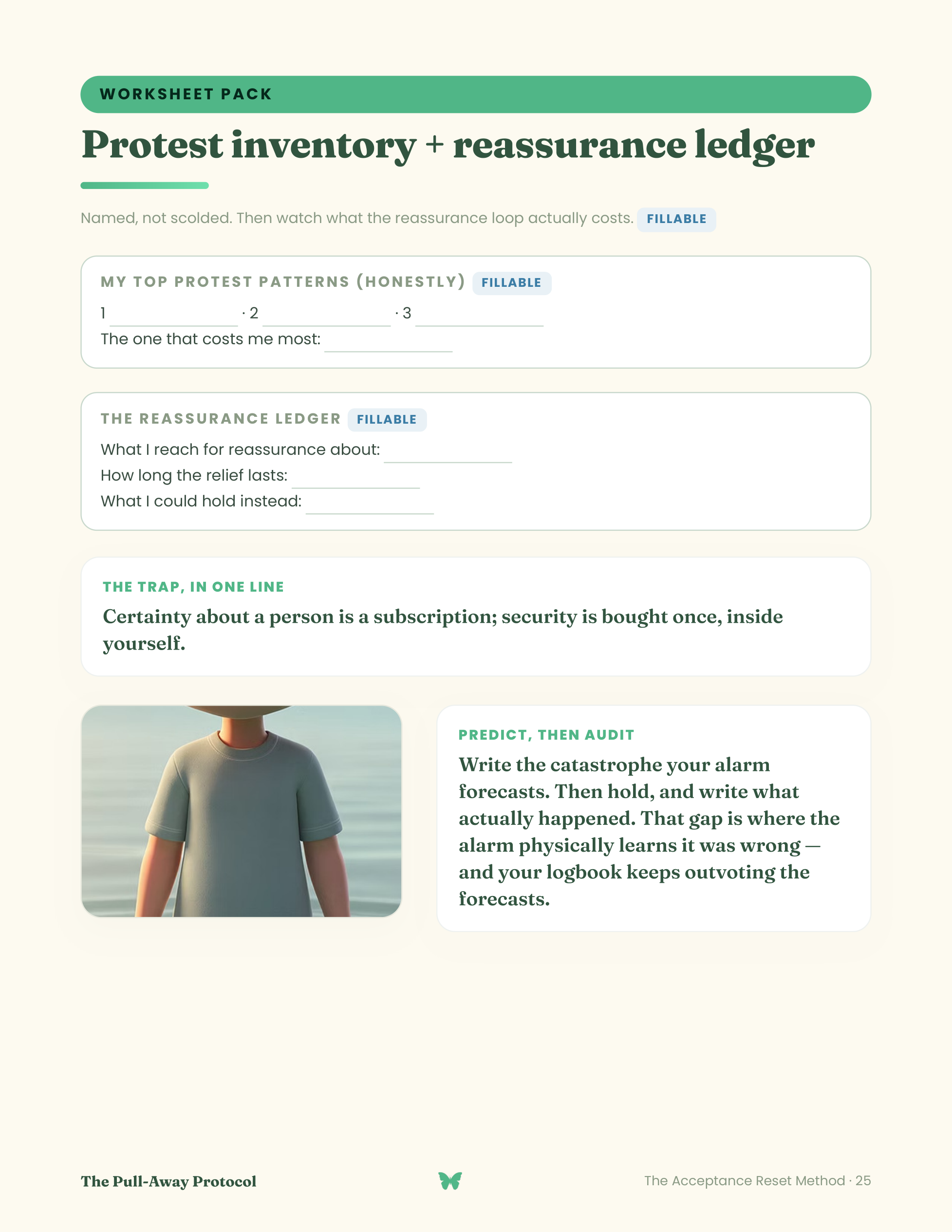
And reassurance won't fix it — it feeds it. "Are we okay?""yes" → ten minutes of relief → the doubt comes back a little sooner. Proof from them is a subscription you re-pay forever. The way out is holding one wave without acting on it, so the alarm slowly learns the delay was never danger.
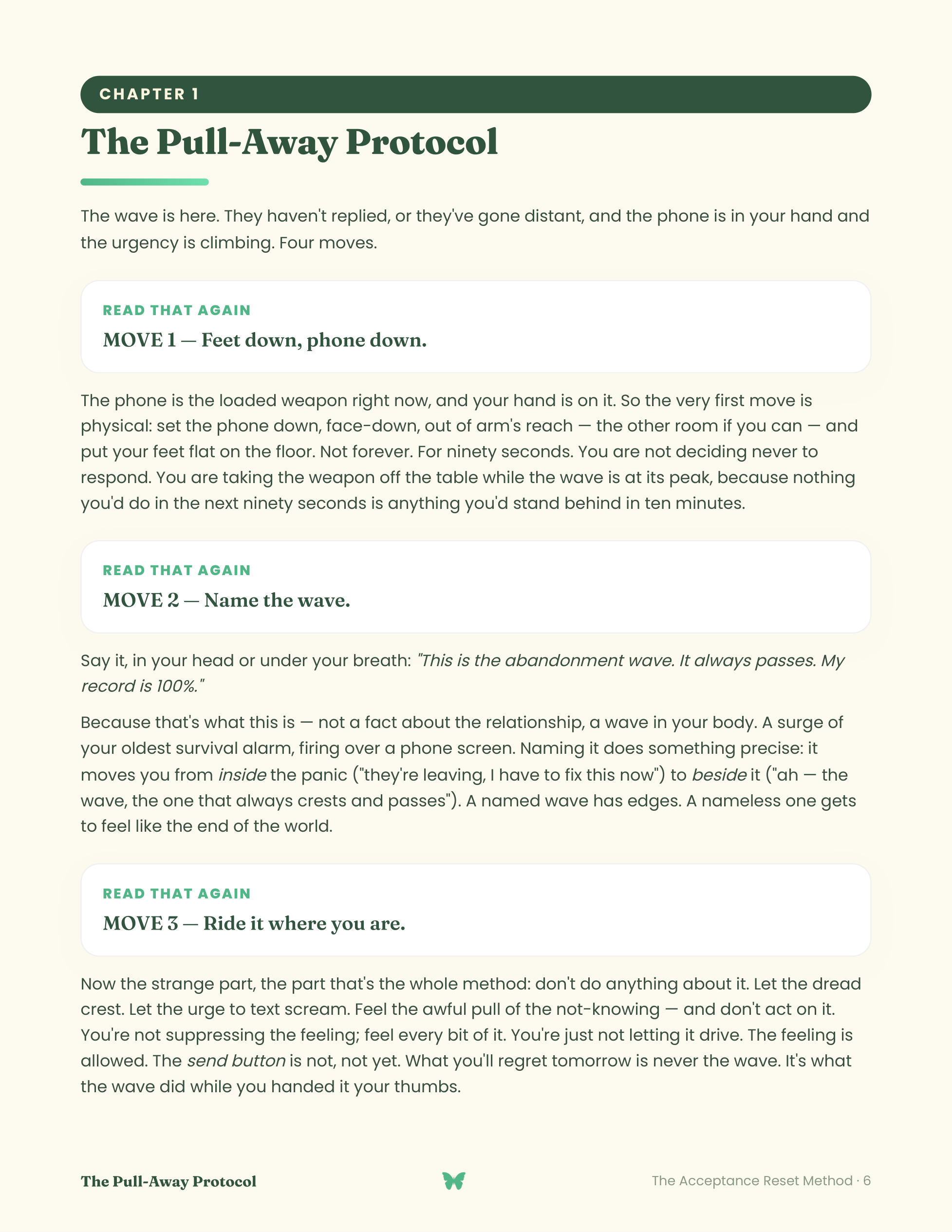
One move for the ninety seconds: name it, and don't send it. The next time the wave rises and your thumb is over send:

  1. Name the state. "I'm activated — this is the wave, not the truth." You're not reading the situation clearly right now, and that's okay; you don't have to. You just have to not act while the alarm is screaming.
  2. Don't send it. Put the phone down. Not forever — just until the wave passes. The text that feels urgent right now is written by the alarm; the calmer you, an hour from now, gets a vote too, and deserves to. Waiting isn't losing. It's refusing to let the wave hold the pen.
  3. Let the wave crest and fall. Chest tight, mind racing, the pull to do something — let all of it be there without obeying it. It peaks in about ninety seconds and eases on its own. When it passes, you'll still have every option you have now, minus one regret.

That's the move. Held a few times, it does the quiet, powerful thing reassurance never could: it teaches the alarm that a slow reply is safe — and turns an anxious pattern, one wave at a time, toward earned-secure.

The full kit is the system around it: the four-move Pull-Away Protocol with the "Don't Send It" card, protest behaviour named without shame, the reassurance trap in full, the careful activated-alarm-vs-real-red-flag chapter, the earned-secure ladder, and the settled-ask conversation.

What's inside the kit

Everything you need, in one kit.

  • 32pages
  • 9worksheets
  • 1audio track
  • lifetime access
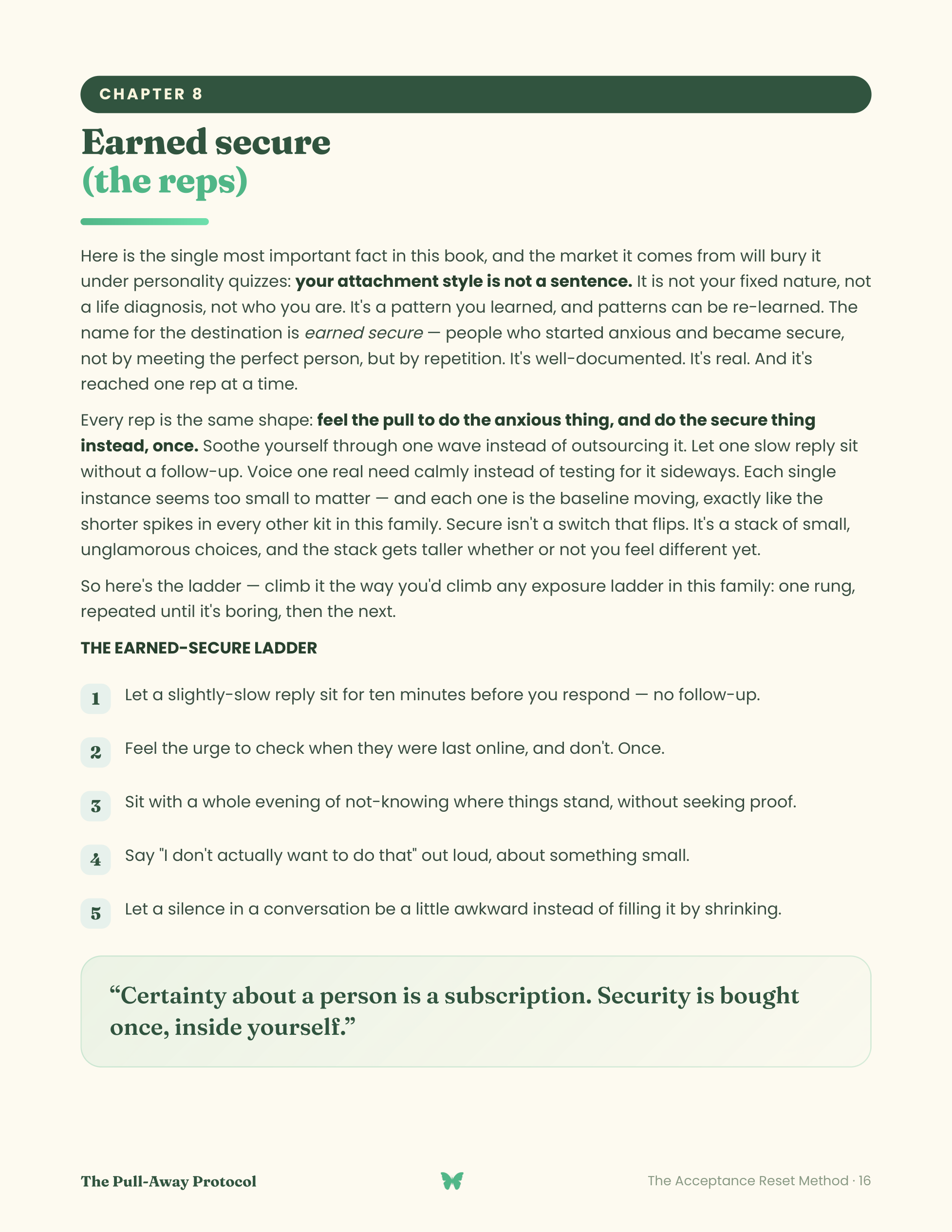
  • The 32-page designed guide — the Protocol in the first chapter, usable tonight
  • The four-move Pull-Away Protocol + the cut-out "Don't Send It" card for your phone case
  • Protest behaviour, named without shame · the reassurance trap · the earned-secure ladder
  • The careful chapter: activated alarm vs. real red flag (we never override your instincts)
  • A real safety page, first — this is for anxiety about someone, not fear of someone
  • Fillable + printable worksheets — wave log, reassurance ledger, the 30-day grid
  • One audio companion — "Hold The Wave" — for the ninety seconds · relapse card

🎧 Audio: “Hold The Wave” (3 min).

Inside The Pull-Away Protocol — page 1 Inside The Pull-Away Protocol — page 2 Inside The Pull-Away Protocol — page 3
Is this you?

This is for you if…

  • One slow reply can lose you a whole day to spiralling
  • you send texts in the wave that the calmer you would never send
  • you've read every attachment-style explainer and still have no move for the moment
  • you want to turn an anxious pattern toward secure, one held wave at a time.

Maybe not, if…

  • You are afraid of your partner or feel unsafe (that is not anxious attachment — page 3 points you to real help, and so do we, above)
  • you're looking for couples therapy (this is a personal protocol for your wave, not a relationship diagnosis)
  • you want a script to make someone stay — this changes what you do with the wave, nothing else.

Already have The Acceptance Reset Method ($47)? This kit is the same wave method aimed at one hard moment. If you own the full method you have the principle; this gives you the specific protocol, cards and tools for this exact situation.

Questions people ask

Before you decide.

No. It never diagnoses anyone, never scripts against anyone, and never promises someone stays. It changes one thing: what you do in the ninety seconds the wave is loudest. That's the only variable you control, and it's enough.

Then this isn't the right resource, and the guide says so on page three — before any technique — and points you to real support. Anxiety about someone and fear of someone are different things, and the kit never asks you to override an instinct about danger.

The guide draws that line carefully. Anxious attachment can fire in a perfectly good relationship and it can be a real signal — the activated-alarm-vs-red-flag chapter helps you tell the difference honestly, rather than talking you out of a true concern.

No — it's a personal protocol for the anxious surge. You can use it whether you're partnered, dating, or between people; the wave is the same, and so is the move.

No. The reframe and one move above are genuinely complete and free. The kit is the full structured system — the four-move protocol, the reassurance ledger, the earned-secure ladder and the 30-day plan — the parts that turn one held wave into a pattern that no longer runs your days.

Get The Pull-Away Protocol.

The complete system — guide, worksheets, cards and audio. Instant download, yours forever.

$17.99

🛡 30-day unconditional money-back guarantee · instant PDF · free preview pages

Want the whole system? Get all the kits together in The Complete Panic Toolkit — $44.99, or the full Acceptance Reset Method — $47.

Education, not therapy

A self-guided educational program built from lived experience and published research — not medical or psychological treatment. Results vary from person to person.

A real safety line

This kit is for anxiety about someone — not fear of someone. If you are ever afraid of a partner or feel unsafe, that is not anxious attachment: page three points you to real support, and nothing here asks you to override an instinct that says you're in danger.

One rule first

New, unusual, or unchecked symptoms — a racing heart, chest pain, anything that feels different from your normal? Get medically cleared first. This begins after a doctor has ruled physical causes out.

No cure claims

This retrains a learned alarm over time — it doesn't promise to cure anxiety or replace care from your own clinician. Any medication decisions stay between you and your doctor.

EXPLORE MORE