PERIMENOPAUSE · MENOPAUSE ANXIETY · 3AM WAKING

The anxiety nobody warned you about

The Midlife Calm Reset

The behavioural manual for the panic that arrives in your 40s and feels nothing like before — HRT-neutral, dismissal-proof. Here's what's actually happening, and one thing to hold onto mid-wave.

Built from 10,000+ real recovery stories · 4-min read

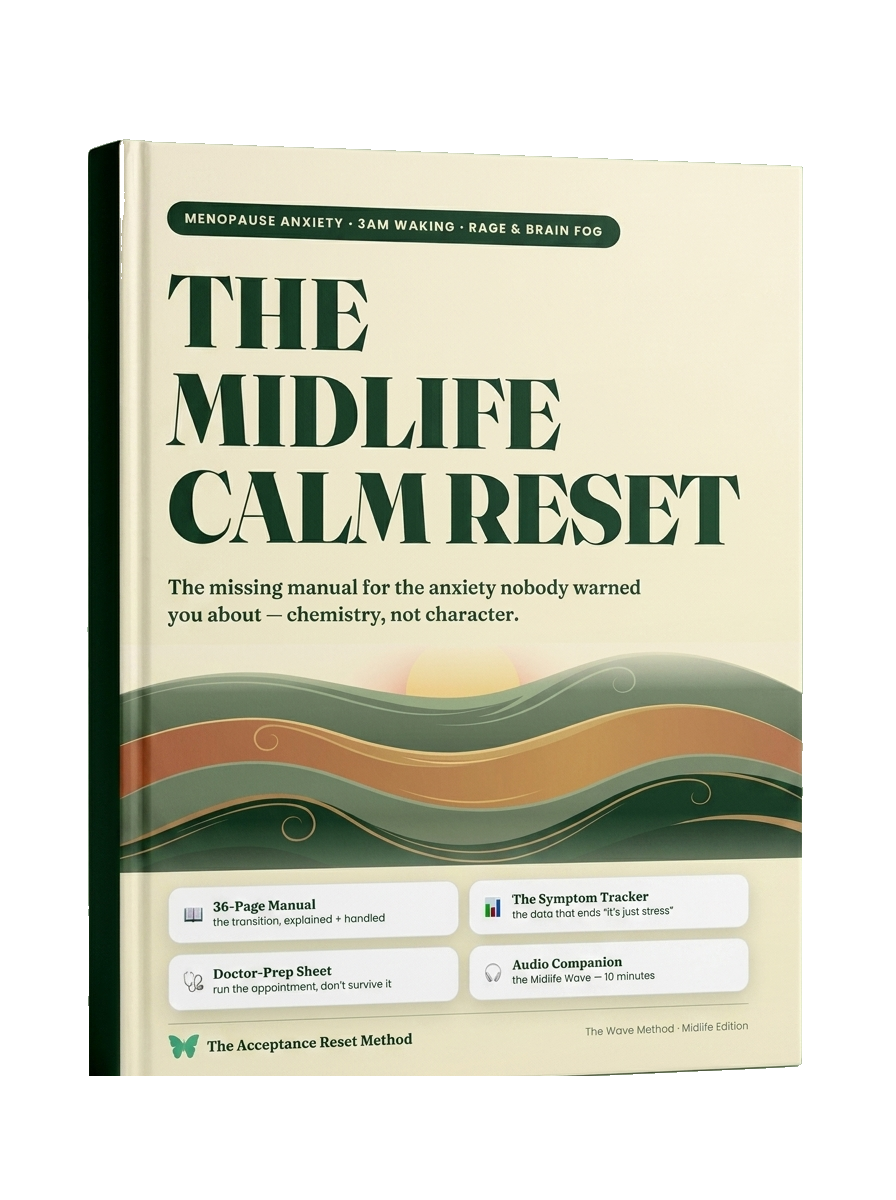
The The Midlife Calm Reset — kit mockup
The moment

New anxiety in your 40s that feels nothing like the anxiety you knew before. Waking at 3am with a slamming heart. Rage, then tears, over nothing. A highway that suddenly feels frightening. And a seven-minute appointment where you're told it's "just stress."

Nobody prepared you for this. Not for the panic that arrived out of nowhere mid-forties. Not for the way your own reactions stopped feeling like yours. Not for being handed a shrug when what you needed was an explanation.

The anxiety advice out there is written for a different nervous system than the one you have now. The menopause content is all hormones-or-nothing. And the one thing that would actually help — a plain-language, do-this manual for this — is the thing nobody wrote.

Here's where it turns: you are not losing your mind. Your nervous system lost its brake. That's not a figure of speech. It's chemistry, and it has a map.

Free · no email needed

First, the part nobody explains.

The core reframe and one move you can use — genuinely useful on its own. The kit is the full structured system.

Why it feels different this time — three chemicals, plainly.

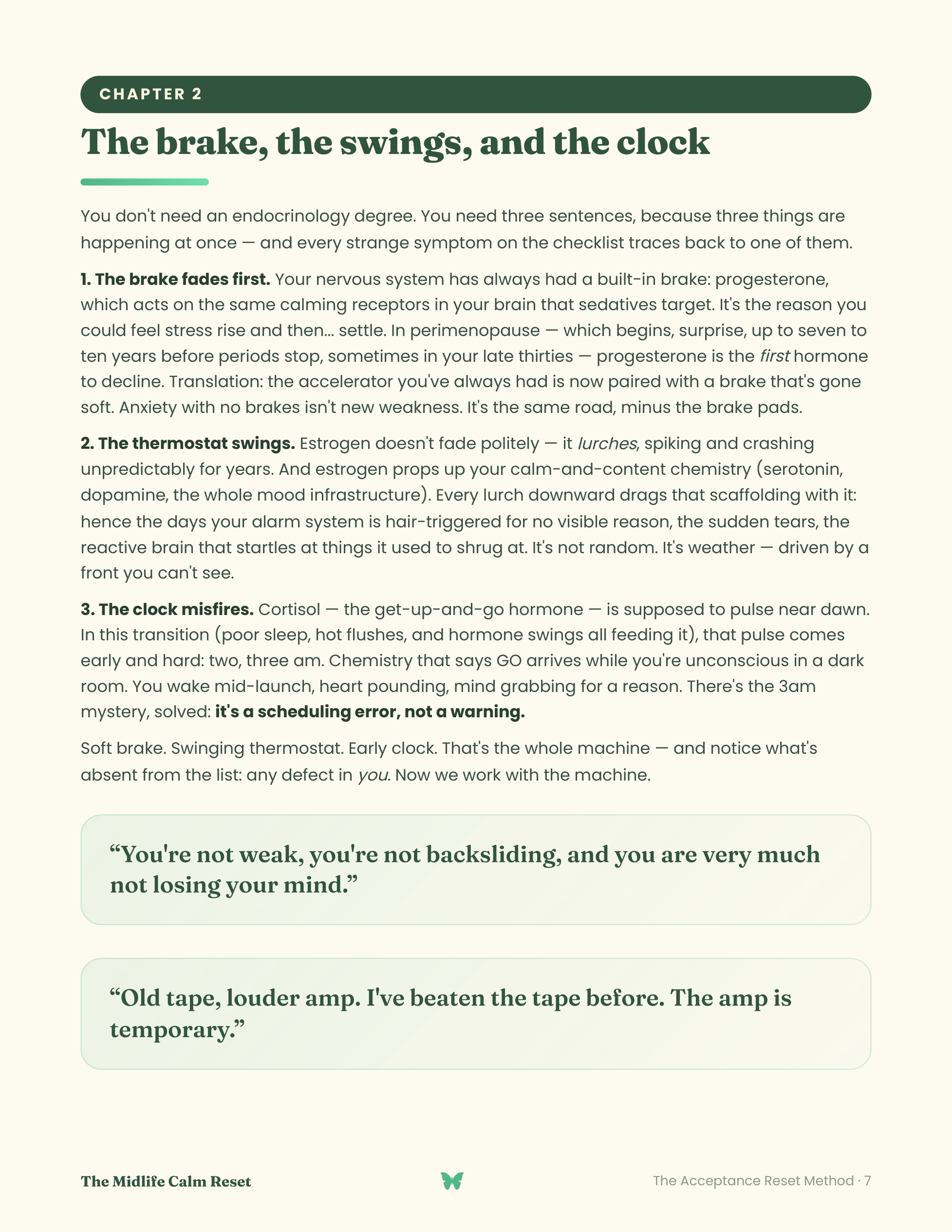
Three shifts are behind almost all of it. Progesterone was your nervous system's brake pedal — calming, steadying — and in perimenopause it fades first, which is why the anxiety can feel brand-new and out of proportion. Estrogen runs the thermostat, and as it swings, so does your mood, your heat, your patience. And cortisol — the morning "get ready" signal — misfires early, which is the 3am jolt with the slamming heart.

So the alarm going off is real chemistry. The danger it's signalling is not. That single distinction takes the terror out of the wave: your body isn't broken and you're not unravelling — a well-built alarm is firing on faulty timing.

None of this is about whether you take hormones. That decision is yours and your clinician's. What's been missing is the behavioural half — what you actually do at 3am, mid-rage, mid-wave — and that half works alongside any choice you make.

One thing to hold onto mid-wave: real alarm, false danger. When the panic or the 3am jolt hits, don't try to argue yourself calm. Do this instead:

  1. Name the mechanism. "This is the missing brake — real chemistry, not real danger." You're not overreacting and you're not fragile; a steadying chemical stepped back and the alarm got loud. Naming it is the difference between riding a wave and drowning in a story about it.
  2. Let it be real and safe at once. The racing heart, the heat, the dread — all real, all chemical, none of it a sign that something terrible is about to happen. Let the sensations be there without treating them as evidence. You don't have to make them stop to be okay.
  3. Do the next small, ordinary thing. Feet on the floor, a glass of water, back to bed. Acting normal toward your body — not fighting it, not fleeing it — is the signal that teaches the alarm it can stand down on its own.
That's the move. It won't rebalance a hormone — nothing behavioural can — but it takes the panic out of the chemistry, which is most of what makes midlife anxiety unbearable.

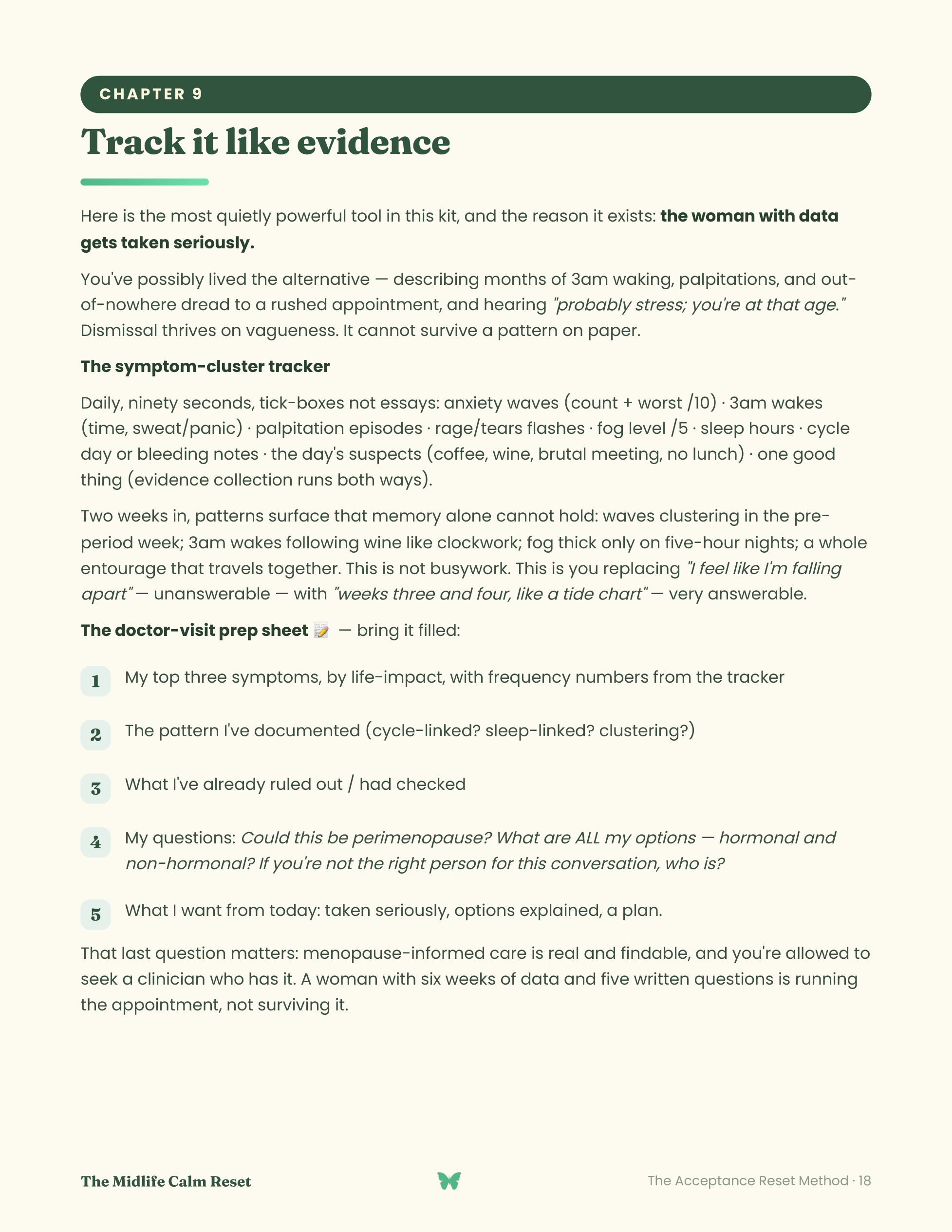
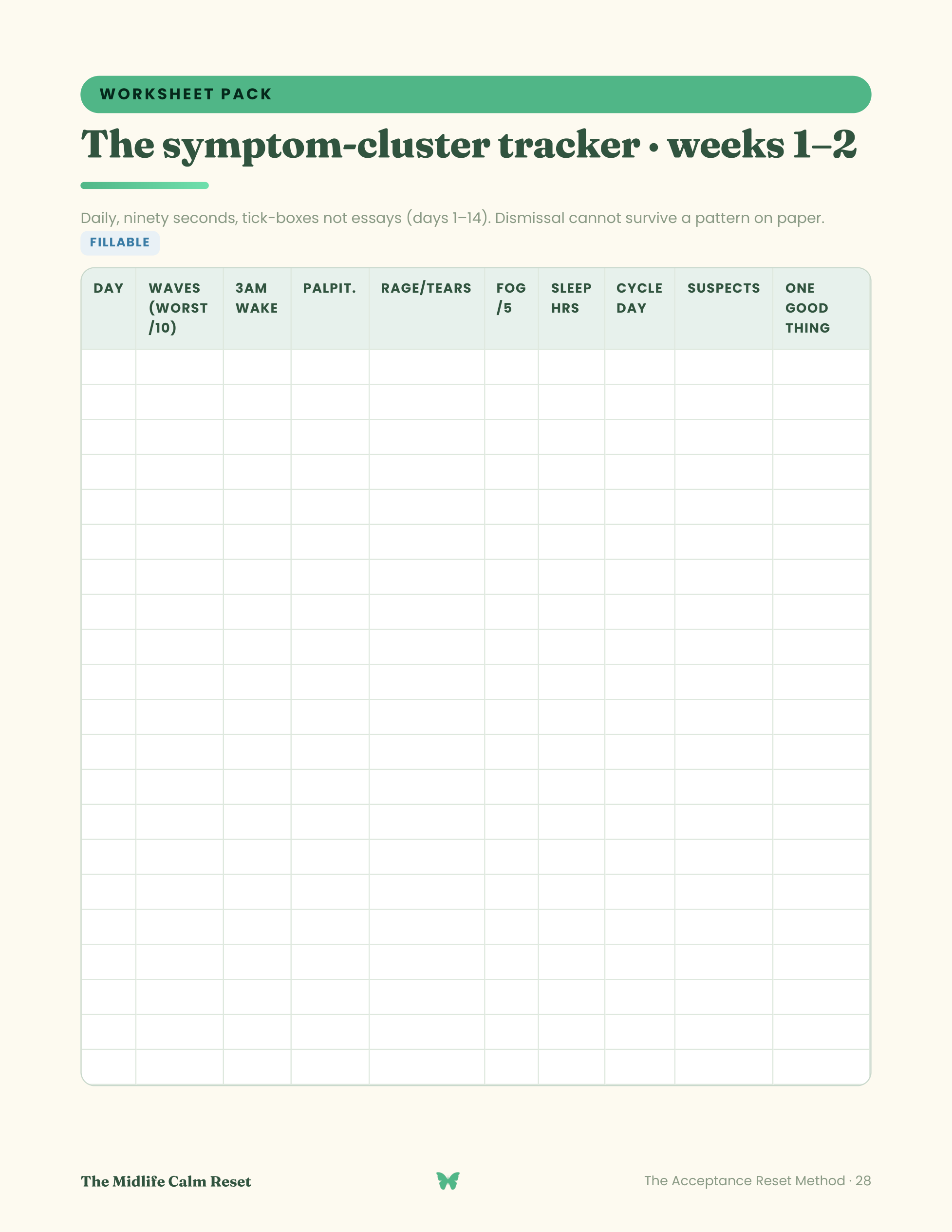
The full kit is the manual around it: the clarity checklist ("is this hormones or me?"), the three-hormone model in plain words, the mid-wave and 3am protocols with cards, the rage-and-tears repair, the fog chapter with the honest hope data, the symptom-cluster tracker, and the doctor-visit prep sheet that turns "I feel like I'm falling apart" into data an appointment can't dismiss.

What's inside the kit

Everything you need, in one kit.

  • 36pages
  • 8worksheets
  • 1audio track
  • lifetime access
  • The 36-page designed guide — validation first, mechanics second, tools throughout
  • The clarity checklist — "is this hormones or me?" answered on page 3
  • The three-hormone model in plain language (no endocrinology degree required)
  • The mid-wave protocol + the 3am waking chapter (+ bedside cards)
  • The symptom-cluster tracker + the doctor-visit prep sheet (the dismissal antidote)
  • The rage-and-tears chapter + snap-repair + a household-script card · brain fog without fear
  • Strictly HRT-neutral · "The Midlife Wave" audio · 30-day reset + relapse card

🎧 Audio: “The Midlife Wave” (2 min).

Inside The Midlife Calm Reset — page 1 Inside The Midlife Calm Reset — page 2 Inside The Midlife Calm Reset — page 3
Is this you?

This is for you if…

  • New anxiety in your 40s (or late 30s) that feels nothing like before
  • waking at 3am with a slamming heart
  • told it's "just stress" and left without a map
  • you want the behavioural manual, and the tools to make an appointment actually count.

Maybe not, if…

  • You're looking for advice on whether to take HRT (this is rigorously neutral — that's between you and your clinician)
  • you haven't had new or changed symptoms checked once (do that first)
  • you want this to replace seeing a doctor — it's built to make the visit work, not skip it.

Already have The Acceptance Reset Method ($47)? This kit is the same wave method aimed at one hard moment. If you own the full method you have the principle; this gives you the specific protocol, cards and tools for this exact situation.

Questions people ask

Before you decide.

Neither — rigorously neutral. The kit never tells you what to do about hormones; that decision belongs to you and your clinician. What it gives you is the behavioural half that works alongside any choice, plus a chapter that preps you for that exact conversation.

Possibly not. Perimenopause can begin seven to ten years before periods stop, and the anxiety is often the first sign, long before the hot flushes. The clarity checklist is built to help you tell.

No — it makes the visit work. The doctor-visit prep sheet exists because dismissal thrives on vagueness; you walk in with tracked data instead of "I just feel off," and that changes the appointment.

The opposite of general. It's the behavioural manual for the anxiety specifically — what to do at 3am, mid-panic, mid-rage — which the hormone content skips and the anxiety content gets wrong because it's written for a different nervous system.

No. The reframe and the mid-wave move above are genuinely complete and free. The kit is the full structured system — the checklist, the tracker, the protocols, the doctor-prep sheet and the 30-day plan — the parts that turn one steadier wave into a manual you can live by.

Get The Midlife Calm Reset.

The complete system — guide, worksheets, cards and audio. Instant download, yours forever.

$27

🛡 30-day unconditional money-back guarantee · instant PDF · free preview pages

Want the whole system? Get all the kits together in The Complete Panic Toolkit — $44.99, or the full Acceptance Reset Method — $47.

Education, not therapy

A self-guided educational program built from lived experience and published research — not medical or psychological treatment. Results vary from person to person.

One rule first

New, unusual, or unchecked symptoms — a racing heart, chest pain, anything that feels different from your normal? Get medically cleared first. This begins after a doctor has ruled physical causes out.

No cure claims

This retrains a learned alarm over time — it doesn't promise to cure anxiety or replace care from your own clinician. Any medication decisions stay between you and your doctor.

EXPLORE MORE