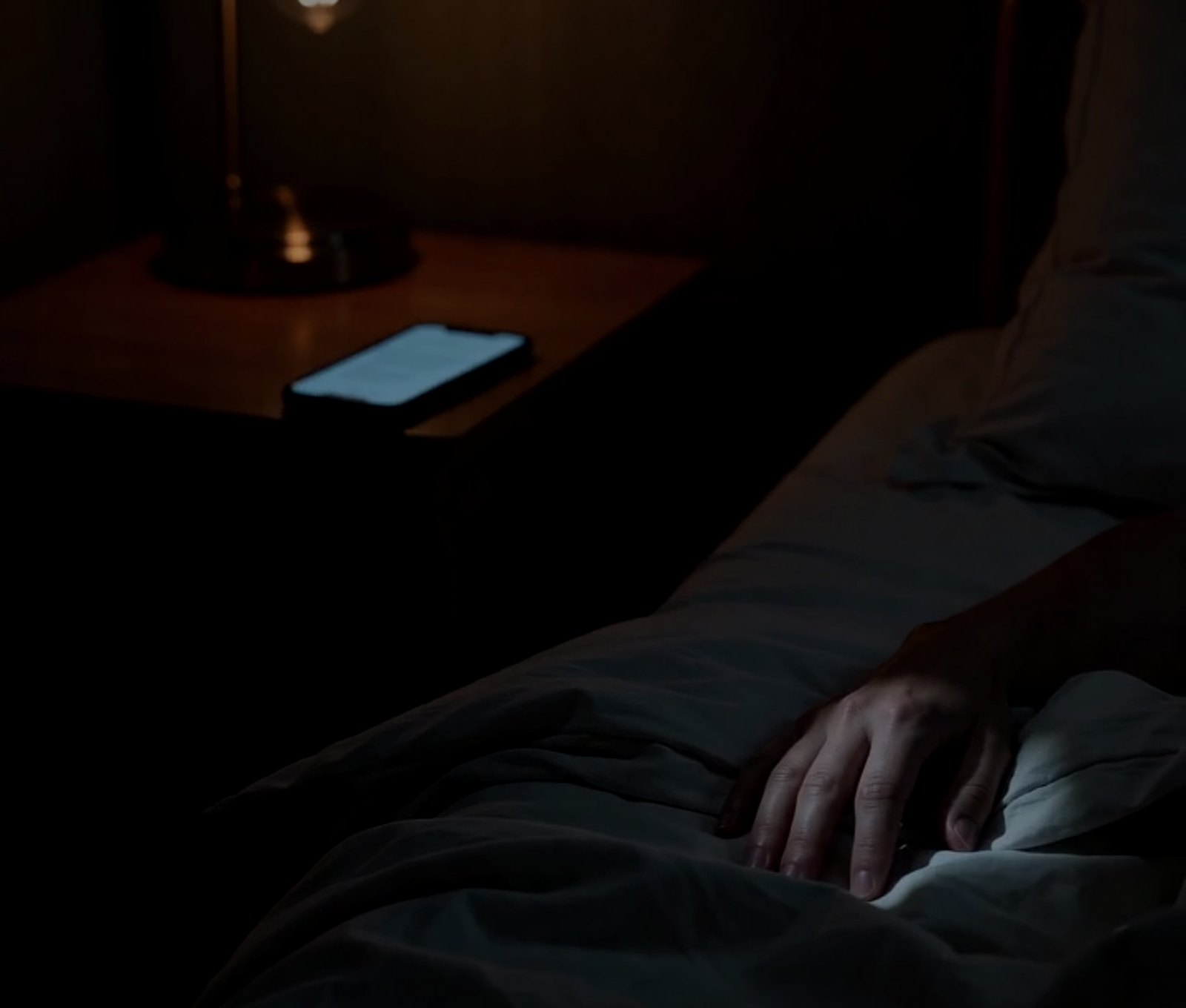
Some nights I sat on the bathroom floor. Some nights I lay there taking my own pulse. One night I drove to the hospital and sat in the car park without going in.
Different night. Different wave.
I used to google my symptoms with the phone face-down on the mattress, so the light wouldn’t wake anyone.
I tried what you’re supposed to try. Melatonin. The sleep apps. A doctor who told me it was “just stress” — which is a sentence you can’t argue with and can’t use.
And here’s the part nobody warns you about. The night was never the real cost.
The cost was the whole next day.
You get up anyway. And you spend the day underwater, running on a battery everyone assumes is full, watching the light go and knowing what’s waiting for you at the other end of it.
So I started reading other people at 3 a.m.
You can tell what time a panic post was written without looking at the timestamp. “Is this a heart attack or is this anxiety” gets posted at 3:14 in the morning. Always around then. The 3 a.m. ones are a different species — shorter, worse spelling, written one-handed in the dark.
I read about ten thousand of them.
And the recovery posts — the ones written months or years later, by people who were sleeping again — kept describing the same turn. Not a technique. A moment where they gave up on something.
They stopped fighting it.
Everything I had ever been handed was a way to fight it. Breathe in for four. Count five things you can see. Distract yourself. Get up and walk it off. Just calm down.
Every single one of them is a way of saying: this must stop, and it must stop now.
And that is the one instruction that keeps it going.
Think about a Chinese finger trap. You put a finger in each end and you pull — because pulling is what any sane person does when they’re stuck. And it tightens. It tightens exactly as hard as you pull.
The way out is to push your fingers toward each other. The one move every instinct in your body is screaming at you not to make. Then it lets go.
Panic works the same way, and not for any mystical reason. Your brain is running a threat check, and it doesn’t read your thoughts — it reads your behaviour. When it watches you fight, brace, escape and grip the mattress at 3:14 in the morning, it draws the only conclusion available to it: we are in danger. Send more.
Your struggle is the evidence. That’s the loop.
You are not failing at calming down. Calming down is the trap.
I’d love to tell you I discovered that. I didn’t.
An Australian physician named Dr Claire Weekes published it in 1962, in a book called Self Help for Your Nerves. Her whole instruction was four words long: face it, accept it, float through it, let time pass. Modern acceptance-based therapy rebuilt the same idea with better vocabulary. A licensed therapist’s video teaching the identical move has been watched more than a million times.
Ten thousand strangers found their way to the same conclusion in the dark, one at a time, most of them never knowing the research existed. What none of us had was the thing written down for the hour it actually happens.
That’s the only thing I built.
The Bed Is Not the Enemy
47 pages, and almost none of it is theory.
- The 4-step move, on a card that sits by the lamp — because at 3 a.m. you will not remember a technique you read in April.
- A 30-night wave log, so you can watch the thing shrink instead of taking my word for it.
- 2 audio companions for the wake-up itself, for the nights when reading isn’t on the table.
No app. No streak to break. No 5 a.m. routine. Nothing to remember, because the card remembers for you.
I’m not going to tell you the first night is magic. It isn’t.
The first night you’ll do it badly, and the wave will come anyway, and you’ll lie there wondering whether you got scammed. That’s normal. That’s the finger trap, still tight, because you’re still pulling.
What changes isn’t that the wave stops arriving. It’s what the wave costs you. It gets shorter. Then it gets boring.
The wave still turns up some nights. It’s shorter now. It’s boring. And it doesn’t take the next day with it.
That’s the thing I wanted and didn’t know how to ask for. Not a life with no waves.
A day that doesn’t get eaten.
Ten thousand people stopped doing the same thing. I was one of them.
You can stop tonight.