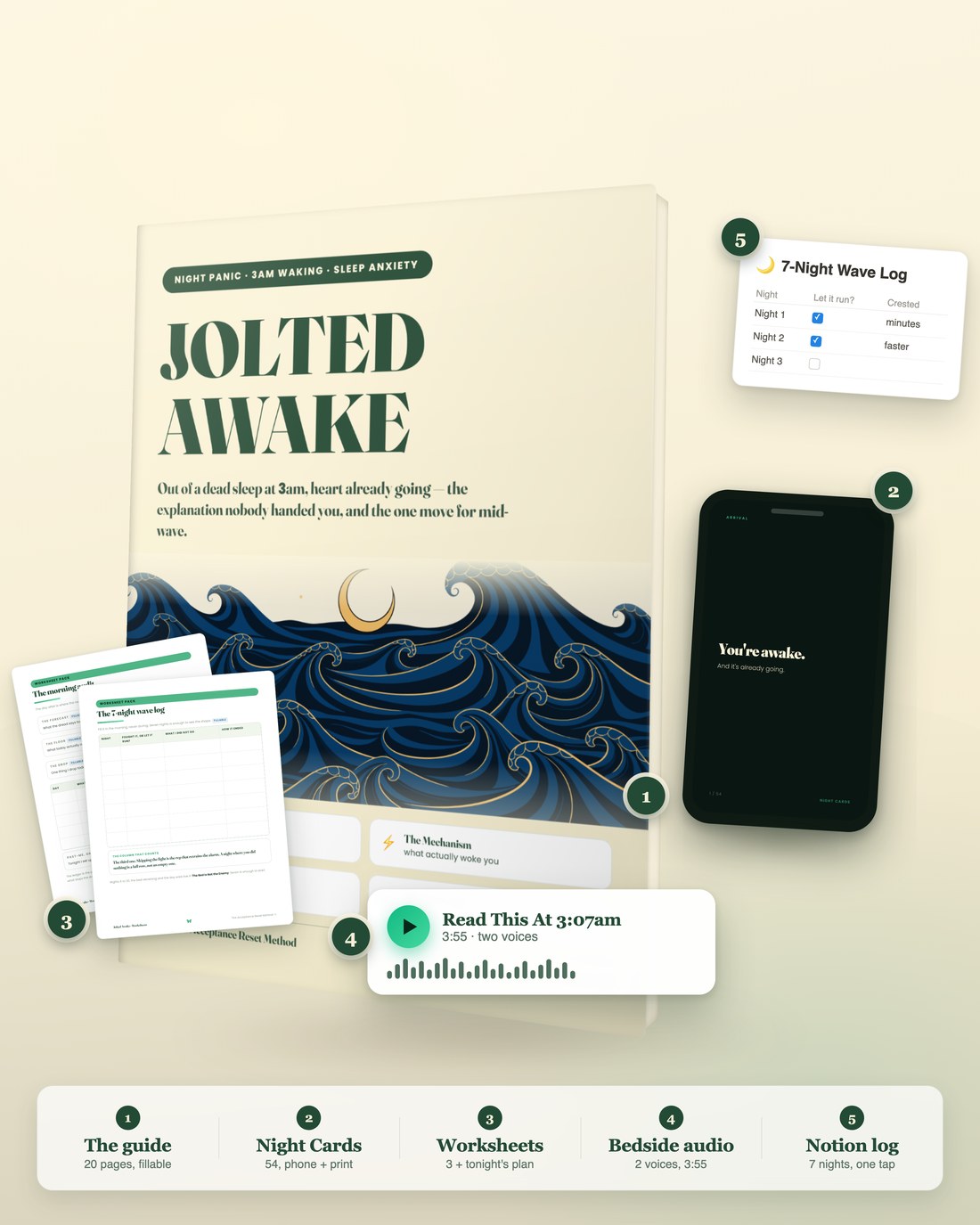
It is not random, and it is not danger. It is an alarm. Once somebody explains how the alarm works, the night stops being a mystery you have to solve at 3am. 20 plain pages, 54 cards, 3 worksheets, 2 audios — built for the hour itself.
Built from 10,000+ real recovery storiesInstant download · reads on a phone in the dark · 30-day refund — if it doesn't help, you don't pay
3:07am. Awake out of nothing, heart already going, the room completely still.
You reach for the phone. You do the arithmetic on how little sleep is left. Both of those make it worse.
Nothing is wrong with the room. Nothing is wrong with you. An alarm went off, and it went off before you were awake to cause it.
It crests on a clock of its own. The only thing that adds time is fighting it.
Cortisol does not wait for the morning. It climbs for hours before you get up. The back half of the night is also the light half, so you are near the surface and easy to wake.
Put those two together in a dark, silent room and you get a surge with nothing attached to it. The mind goes looking for a cause. At 3am there is nothing in the room but you, so it picks your body.
The surge did not come from your thoughts.
Your thoughts came from the surge.
One thing makes it start over, and that thing is fighting it. That is the whole guide, and it is why “just breathe” never touched this.
Chasing sleep is the fight. You cannot chase sleep and catch it.
Checking is one of the things that keeps an alarm sensitive.
The phone was standing in for a person. It is a poor one at 3am.
It aims at sleep. This was never a sleep problem.
Every one of them treats the wave as a threat to handle. Handling it is what feeds it.
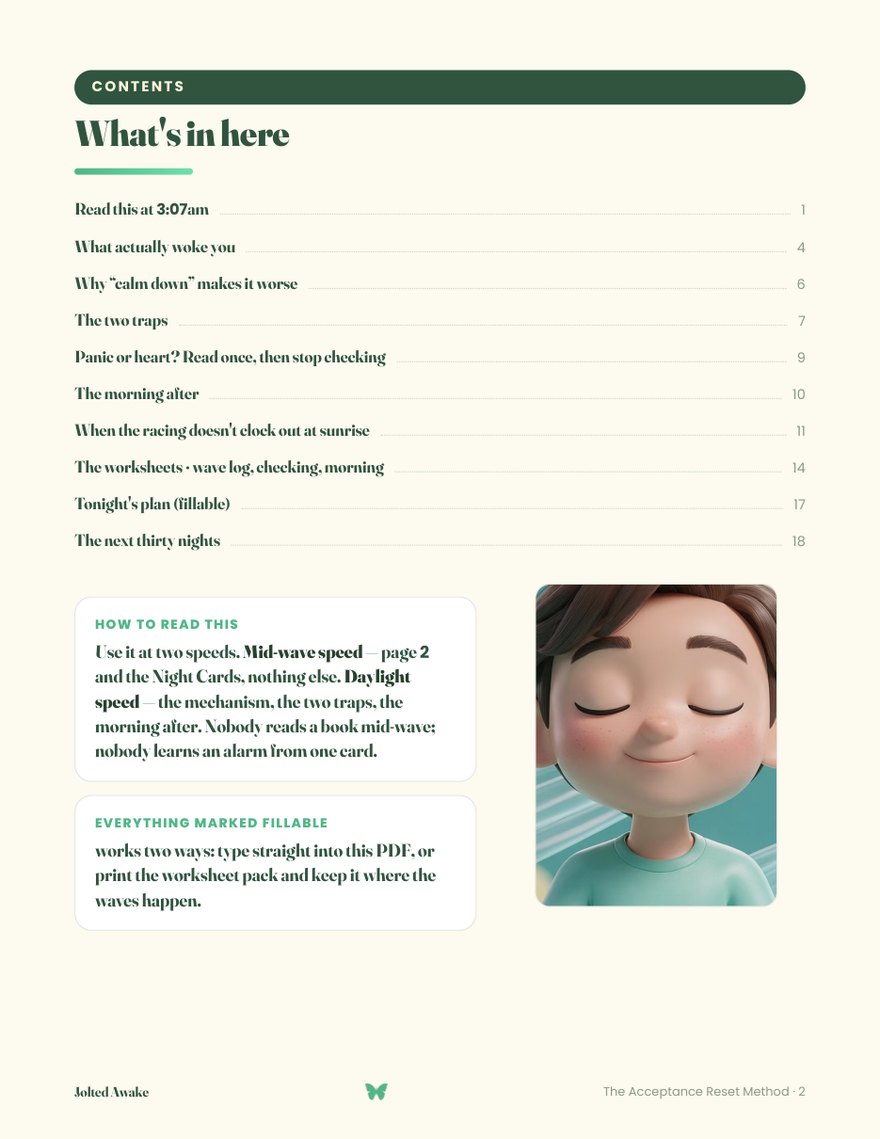
Six short chapters: what actually woke you, why “calm down” makes it worse, the two traps, panic or heart, the morning after, and the day that follows a wrecked night.
One line at a time, large type, nothing to decide. It is the page you open at 3:07am with the brightness down.
Swipeable on a phone in the dark, plus a printable set for the nightstand. For the nights when a page is too much.
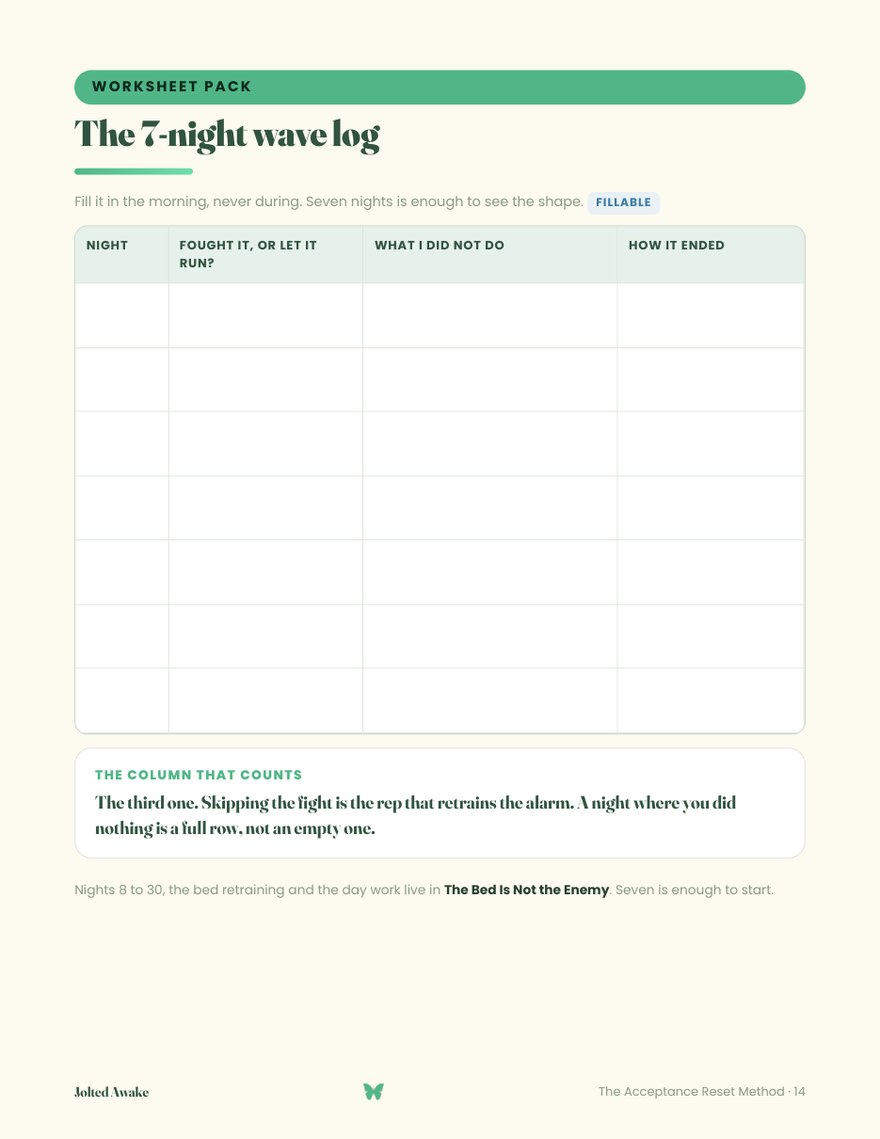
The 7-night wave log, the checking log and the morning audit — in the guide, and as their own pack you can print and keep by the bed.
About four minutes each, two different voices. For the nights when even one line at a time is too much reading.
The same wave log as a Notion template you duplicate in one tap, so the morning entry happens where your phone already is.


Real pages from the guide.
Built from 10,000+ real recovery storiesInstant download · reads on a phone in the dark · 30-day refund — if it doesn't help, you don't pay
Try it tonight. If it doesn't help, you don't pay.30-day refund, no questions asked. You keep the files either way.
No. Chapter 2 is about why calming down makes it worse. The breathing advice is the thing being argued with, not the thing being sold.
Most of it explains anxiety in general. This explains one hour. Why the body fires at 3am specifically, and why that hour and not another.
Page 2 assumes you cannot. It is one line at a time and asks nothing of you. The cards go further — one line each.
There is a bigger kit for the thirty nights after tonight. You will be offered it at checkout, and it is named again on the last page of the guide. Your $7 comes off it either way, so the two together still cost $17.99. If you never want it, nothing here expires.
Ask for the refund. Thirty days, no form to argue with.
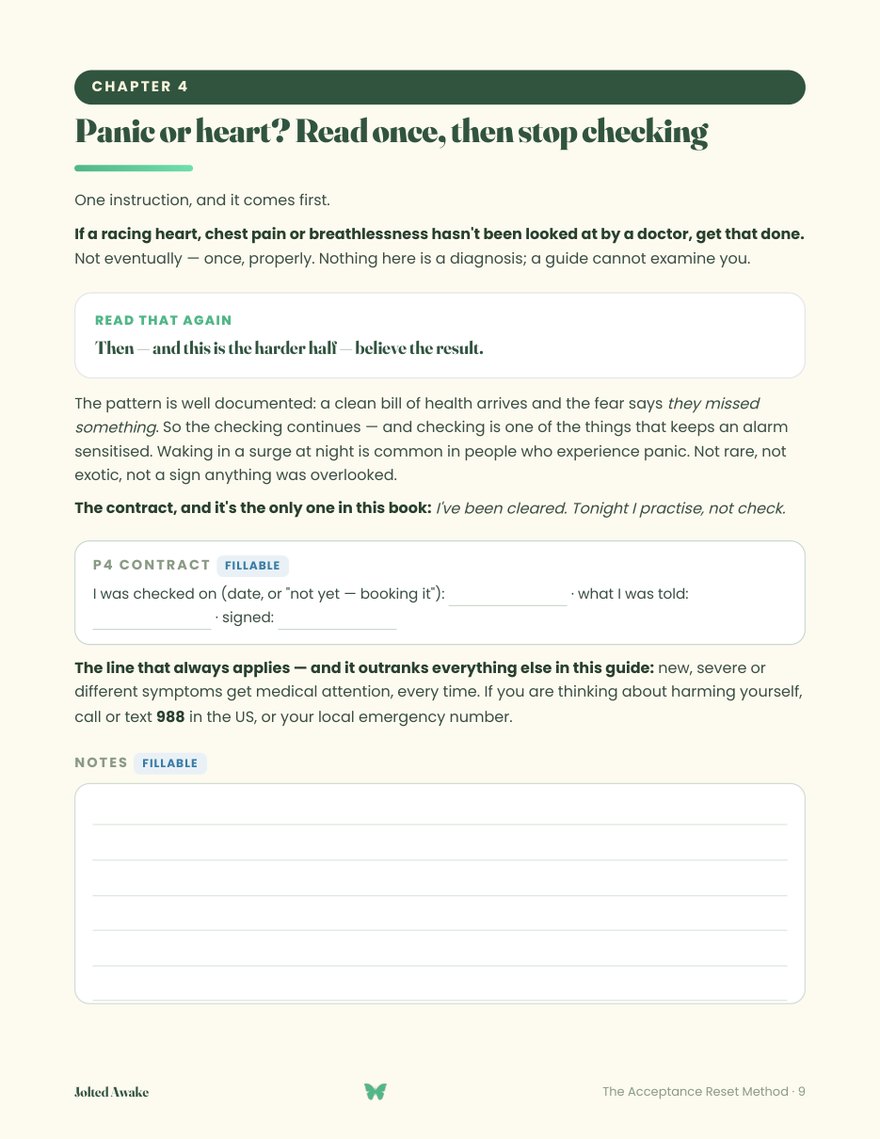
A racing heart deserves a doctor's look first. If that has not happened, book it. This guide is for the nights after the tests come back clear.
New, severe or different symptoms get medical attention every time. In the US, call or text 988 for crisis support.
This is not therapy and does not pretend to be. It is an explanation, written so it can be read during the thing it explains.
20 pages and 54 cards, on your phone in about two minutes.
Instant download · 30-day refund — if it doesn't help, you don't pay